The health-tourism patient journey, from first message to aftercare
Published 19 October 2026Reviewed 19 October 20267 min read
On this page
Why is the health-tourism journey different?
A local patient can visit the clinic and meet the doctor before deciding. A patient abroad decides from messages, photos and a quote, and may be weighing up several clinics at once. Language, time zones, currency and flights all come into it, and most follow-up happens remotely once they are home.
Who does what at each stage?
A sample layout for a clinic or a health-tourism agency; adapt the roles to your team. Medical decisions always rest with the doctor.
- 1. First enquiry
- What the patient needsA quick, personal reply in their own language
- OwnerA coordinator assigned by the patient's language
- Ready to move on whenContact recorded, source noted, first reply sent
- 2. Medical intake
- What the patient needsTo learn whether they are suitable and what is involved
- OwnerCoordinator gathers the information, doctor assesses
- Ready to move on whenForm, photos and documents complete; the doctor's opinion in writing
- 3. Quote
- What the patient needsTo see what is included, the total and the payment terms
- OwnerCoordinator or sales; the doctor approves the treatment plan
- Ready to move on whenPatient has accepted the quote in writing
- 4. Deposit and date
- What the patient needsCertainty that the date is fixed
- OwnerFinance and coordinator
- Ready to move on whenDeposit recorded, treatment days in the diary
- 5. Travel plan
- What the patient needsClear flights, hotel and transfers
- OwnerCoordinator; intermediary agency or authorised travel agency
- Ready to move on whenConfirmed plan in the patient's hands
- 6. Arrival and treatment
- What the patient needsBeing met, an interpreter, a daily programme
- OwnerTransfer company, the patient's named contact, doctor and team
- Ready to move on whenTreatment days completed
- 7. Going home
- What the patient needsA smooth journey home, with their documents
- OwnerCoordinator and transfer company
- Ready to move on whenReturn transfer done, documents and instructions handed over
- 8. Aftercare
- What the patient needsBeing able to ask questions and knowing whom to contact
- OwnerCoordinator; the doctor for clinical decisions
- Ready to move on whenFollow-up plan completed and case closed
What matters at the first enquiry?
A first message can be very short: a photo, a question about price, a few words. Reply in the patient's language and under a real name, and rather than quoting a price straight away, explain what you need for a proper quote. Assigning enquiries in turn by language and country leaves none without an owner.
Record where the patient came from (which ad, page or agency) at the very start; it is the only way to see which channels turn into treatments.
How should intake and the quote work?
- Run the intake through a form specific to the treatment, not open-ended messaging: the questions the doctor needs, photos from set angles and any previous test results.
- Because you collect health data, tell the patient beforehand how you will use it and obtain explicit consent where required.
- Suitability and the treatment plan are the doctor's decision; a coordinator never promises an outcome.
- Spell out what is included and what is not: hotel nights, transfers, an interpreter, check-ups.
- The validity period, the currency, the deposit and when the balance is due belong in the quote too.
- As an intermediary, give a detailed breakdown of accommodation, transport, transfer, interpreting and consultancy fees, as the regulation requires.
What should the travel plan include?
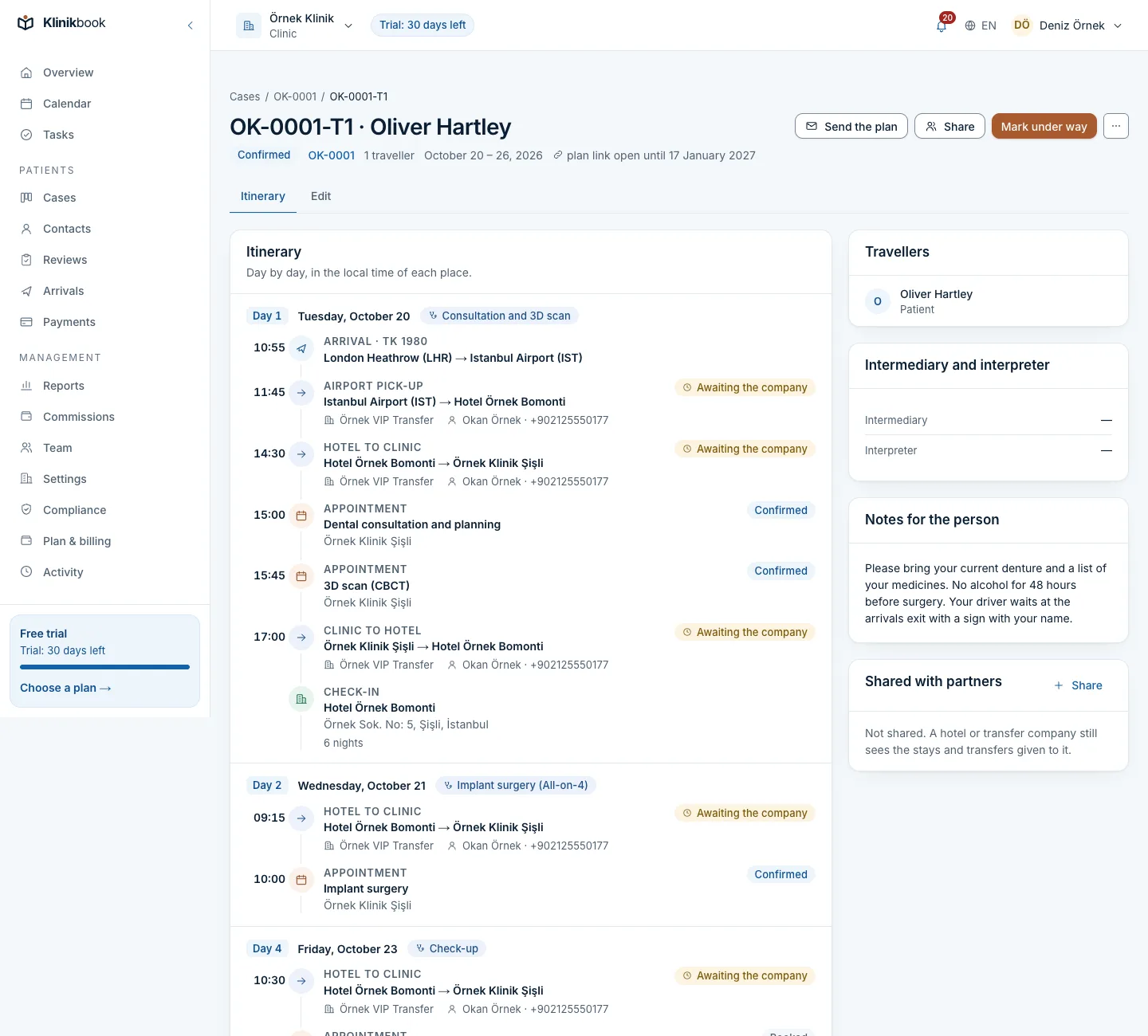
- Who is travelling: the patient and any companions.
- Outbound and return flights, each in the local time of where it happens.
- The hotel's name and address, with check-in and check-out days.
- Each transfer's time, where from and where to, and the driver's name and phone number.
- Treatment days and appointment times.
- Who the interpreter is and which language they cover.
- The person to contact throughout the trip, with a phone number.
What should be planned for arrival and treatment days?
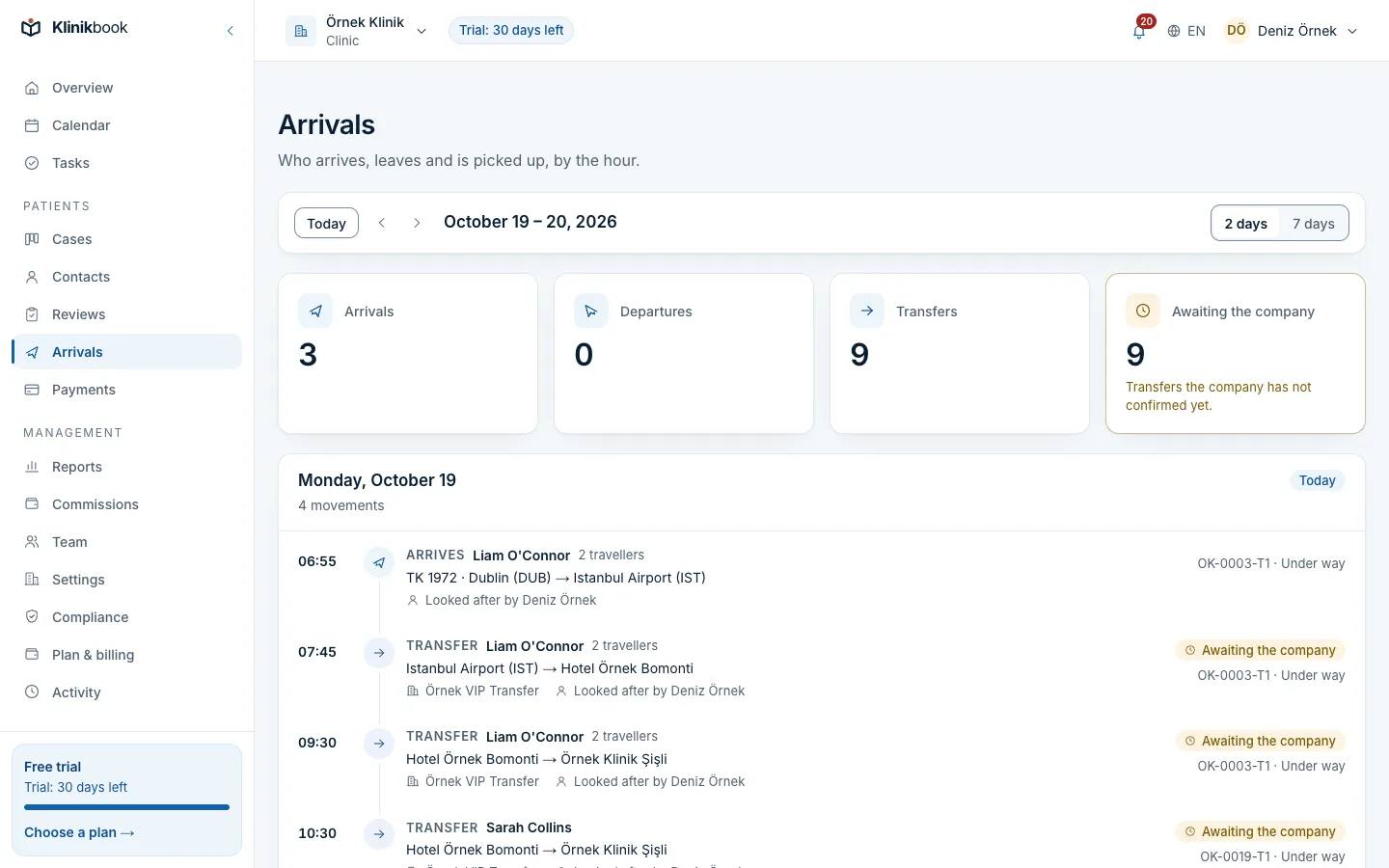
The day before arrival, confirm the flight and the transfer, and send the patient the driver's details. A single list of the day's arrivals and departures stops anyone being left waiting at the airport.
During treatment days the patient should have one point of contact. When the programme changes, tell the hotel and the transfer company at once, sharing only what they need to do their job and never medical information.
What happens after the patient goes home?
The journey does not end at the airport. The NHS advises people considering cosmetic surgery abroad to ask in advance where follow-up appointments will take place, what happens if there are complications and how much aftercare will cost. The UK Foreign, Commonwealth & Development Office tells British nationals travelling to Türkiye for treatment to discuss their plans with their own doctor first.
Have the answers ready at the quote stage: who will get in touch and when, how the patient sends photos, and how a question reaches the doctor. Our aftercare plan guide covers this in detail.
How do you measure the journey?
- First response time: from enquiry to first reply.
- Conversion between stages: enquiry to intake, quote to acceptance, acceptance to arrival.
- Time from sending a quote to its acceptance.
- Reasons for lost cases: price, dates, suitability, no reply.
- Response rate to aftercare check-ins.
How does the journey run in Klinikbook?
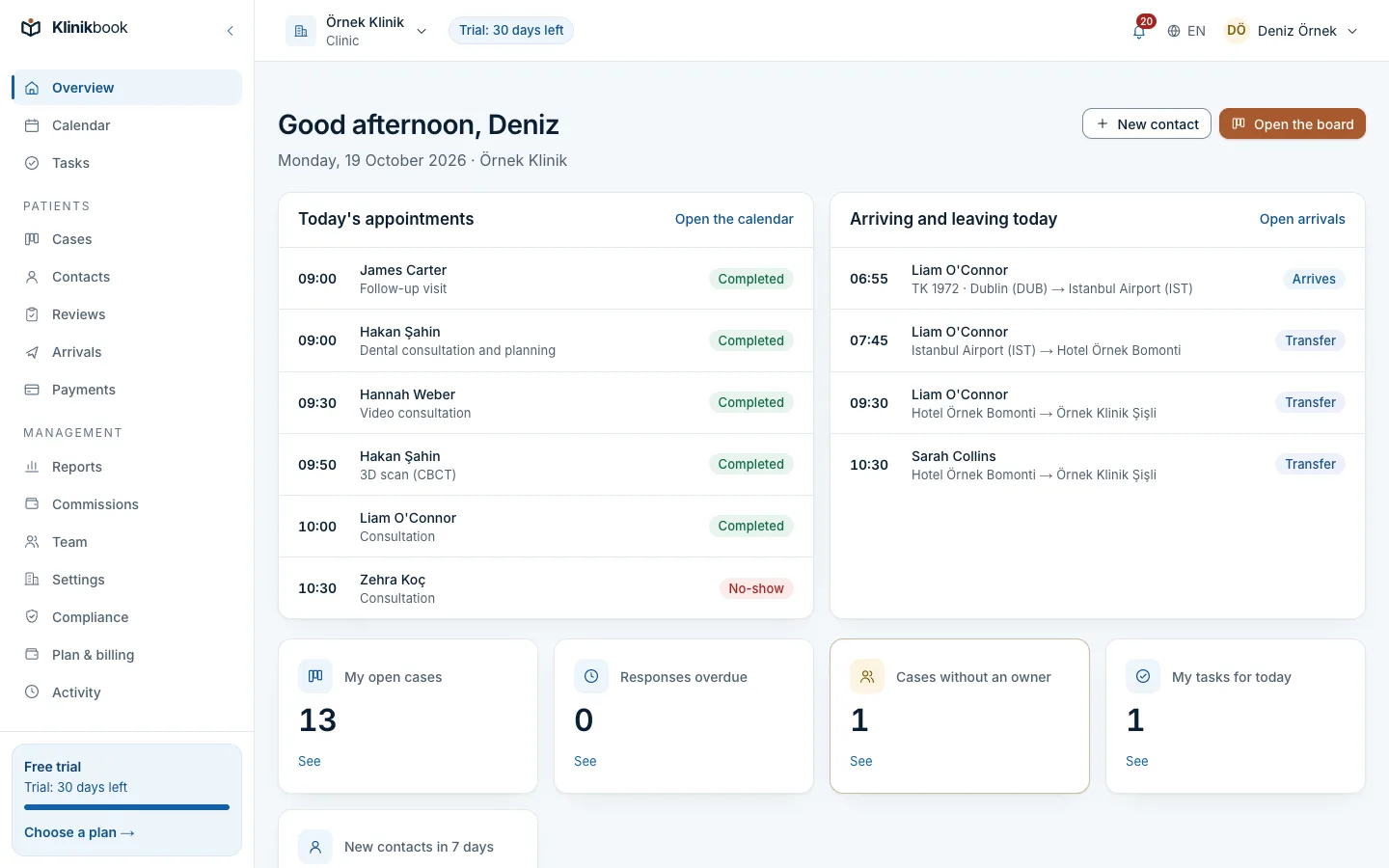
Klinikbook keeps every stage on a single case. It never handles patient money and keeps no medical records.
The enquiry becomes a case
An enquiry from your website form is recorded with its source and assigned in turn to a coordinator by language, country, source or service.
Intake and quote
The patient sends the treatment's form and guided photos through a secure link, and the doctor assesses the case from a review queue. The patient compares and accepts the quote on the portal.
The trip is planned
Travellers, flights in local time, the hotel, transfers and treatment days go on the case's trip. A hotel or transfer company sees only what is shared with it and confirms its transfers.
Arrival and aftercare
The arrivals board shows the day's arrivals and departures. When the case reaches “treated”, the follow-up plan starts by itself.
Frequently asked questions
What does a patient coordinator do in health tourism?
They are the patient's point of contact from first message to the trip home: they gather information, send the quote and travel plan, and keep information flowing between doctor and patient. They make no medical decisions.
What should we share with agencies, hotels and transfer companies?
Only what they need to do their job: travellers' names and flight, hotel and transfer times. Do not share medical information or documents, and review the basis for sharing and your contracts with your lawyer.
Should the clinic book flights and hotels?
That depends on your business model and your authorisation. In Türkiye the regulation requires intermediary agencies to arrange accommodation, transport and transfers through authorised travel agencies; confirm your own position against the text and with your lawyer.
How should the travel plan reach the patient?
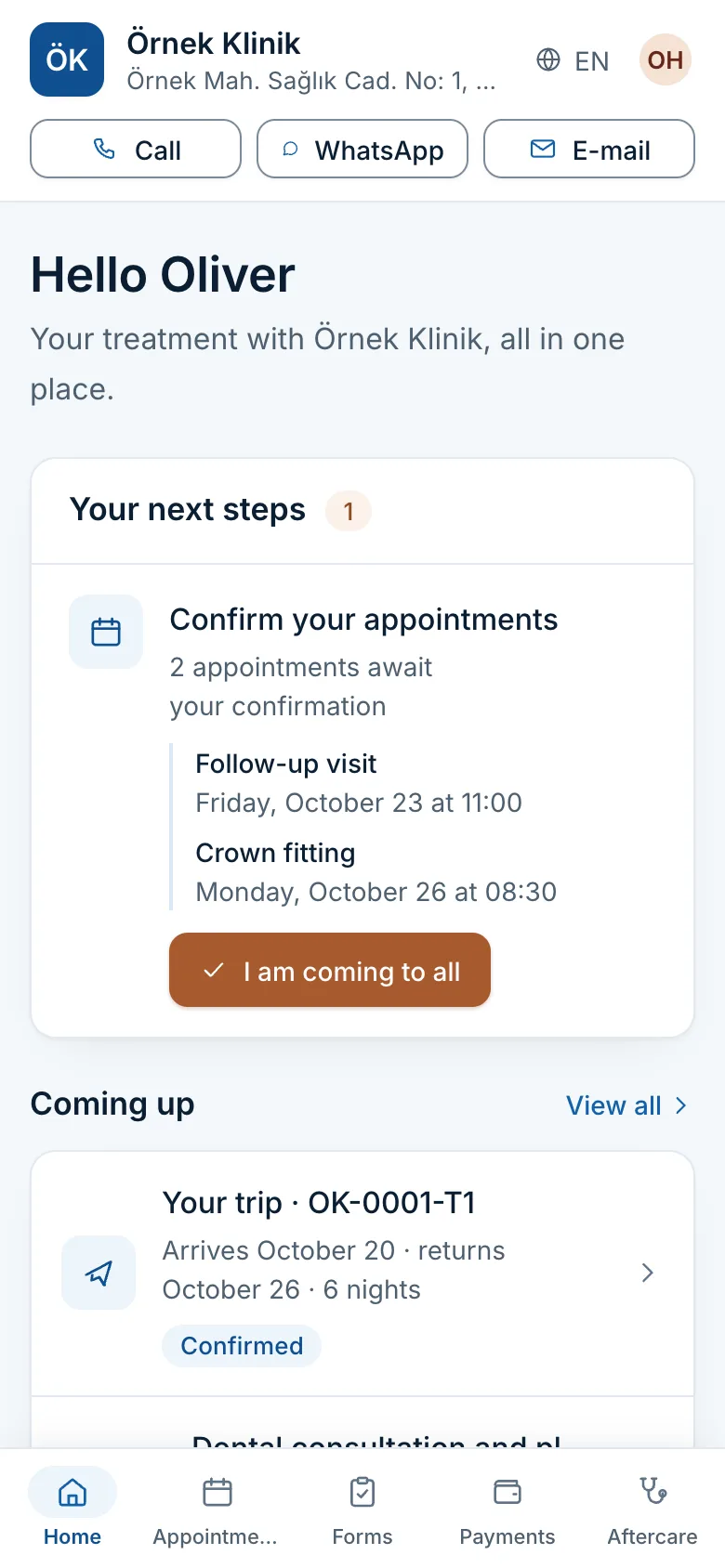
As one document or link, in the patient's language, with every time in local time. Update and resend it whenever something changes.
When should aftercare be planned?
Before treatment. Who handles follow-up and on which days should be in writing in the quote or the pre-treatment information, and the schedule runs from the treatment day.
Sources
- Uluslararası Sağlık Turizmi ve Turistin Sağlığı Hakkında Yönetmelik (Regulation on International Health Tourism and Tourist Health, in Turkish) — Resmî Gazete (Official Gazette of Türkiye), no. 32882, 26 April 2025
- Cosmetic surgery abroad — NHS, last reviewed 14 December 2022
- Turkey travel advice: Health — Foreign, Commonwealth & Development Office (GOV.UK)
Related reading
30-day free trial
Try Klinikbook with your own team
Every feature is open for 30 days, and no card is needed to start.