Dental tourism: planning the two-visit implant and zirconia patient
Published 23 October 2026Reviewed 23 October 20267 min read
On this page
Why two visits?
Some treatments cannot be finished in one go. In implant treatment, for example, there may be a waiting period between placing the implant and fitting the crown or bridge; zirconia restorations need impressions, laboratory work and try-in days. How long the wait is, what is done on which day and whether it suits the patient is for the dentist to decide.
For organisation, it means the patient travels twice, stays twice and keeps in touch with you in between. Making that visible in the quote and the calendar prevents the false expectation that it is a single-visit package.
The timeline of a two-visit process
An example layout. The dentist sets the real timings and order.
- Before the visit
- What happensA panoramic X-ray and mouth photos, complaints and medication/health information are collected; the dentist writes a preliminary view
- OwnerCoordinator collects, dentist assesses
- Quote
- What happensOptions (e.g. number of implants, type of restoration), inclusions and exclusions, dates and accommodation for both visits
- OwnerCoordinator prepares, dentist approves the plan
- First visit
- What happensExamination and imaging, planned procedures, temporary solutions, the check-up appointment
- OwnerDentist; coordinator for schedule and transfers
- Between visits
- What happensWaiting and laboratory time; care instructions and a way to reach you; the second date in writing so nothing is vague
- OwnerCoordinator; questions go to the dentist
- Second visit
- What happensTry-in days, adjustments, delivery
- OwnerDentist; coordinator for schedule
- Warranty and follow-up
- What happensWarranty terms in writing, check-up reminders, questions and photos from the patient's country
- OwnerClinic; the dentist answers clinical questions
What should you ask the patient for before the visit?
- A recent panoramic X-ray: the patient can get it from their own dentist and send it; the doctor asks for more imaging if needed.
- Photos of the mouth from front, right, left and upper and lower jaws, well lit and sharp.
- Complaint and expectations: what do they want to change, how long has it been a problem?
- General health, medication and allergies within the scope the dentist sets (this is special-category data, so inform them first and get explicit consent where needed).
- Earlier treatments and any old records.
- When can the patient come and for how many days; which date ranges suit both visits?
How should quote options be presented?
- Two or three options in the same quote: for example a different number of implants or a different type of restoration. The dentist explains the difference; the quote shows it clearly.
- Inclusions and exclusions per option: examination, imaging, temporary prosthesis, medication, check-ups, hotel nights, transfers.
- The date range for both visits and the approximate length of each.
- Deposit, when the balance is due, currency and validity.
- Warranty: what it covers, how long it lasts and under what conditions must be in writing; the patient should know when to contact you.
- How things will proceed if the patient later needs further work in another country.
How do you manage the gap and the laboratory time between visits?
The most common loss is a second visit date that never firms up. Before the first visit ends, write at least one firm date range for the second and make sure the patient can see it in the portal or by e-mail. If the laboratory takes longer, tell the patient immediately; let your organisation handle the hotel and flight changes.
In the meantime send the patient short e-mail check-ins: “how are you, any questions, would you like to send a photo?” The dentist answers any clinical questions that come in; the coordinator only relays them. If the patient has to see a dentist in their own country, they should know from the start where to turn and which document to ask for.
Try-in days and the second visit
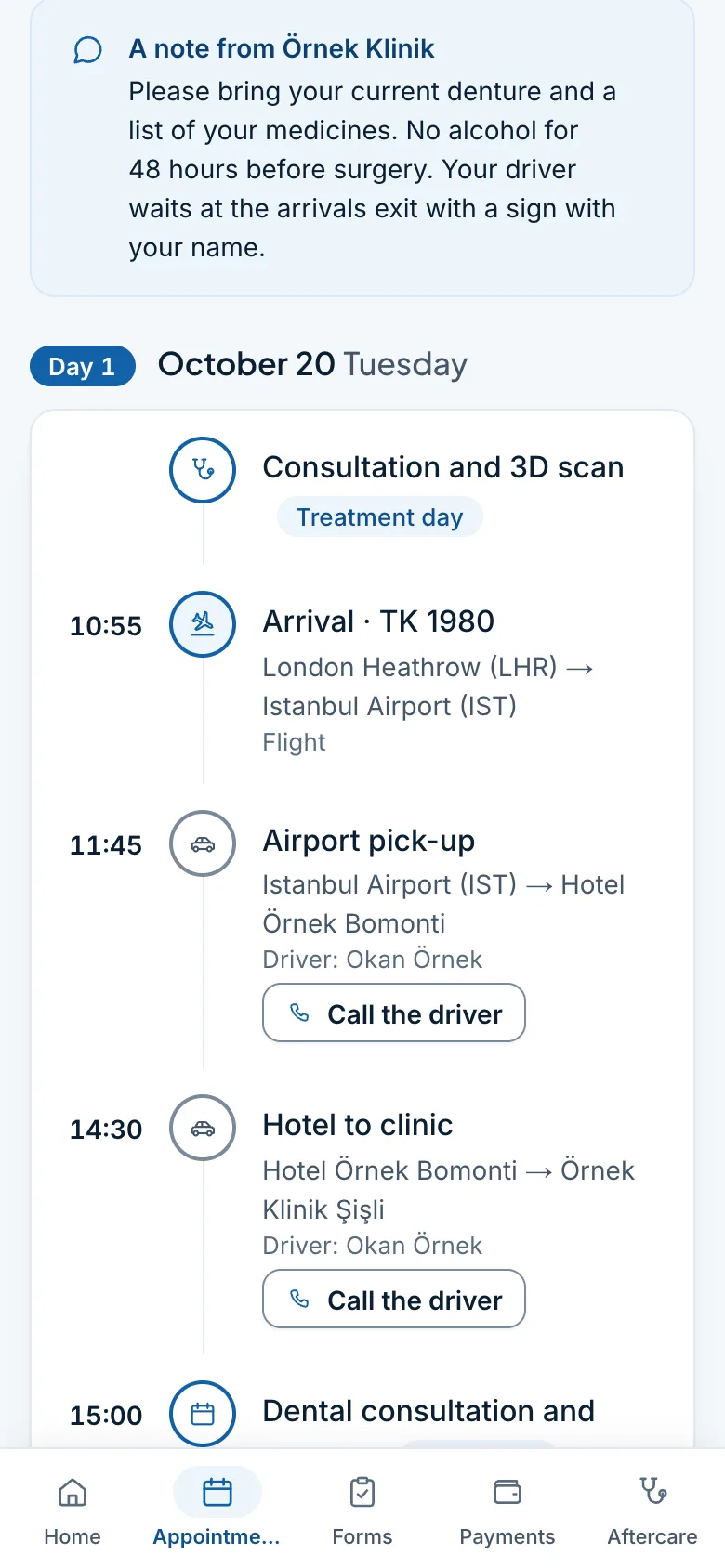
For restorations such as zirconia, try-in days are appointments where the dentist tries the laboratory's work. Put them in the calendar as a dentist and a room; plan so that if one try-in runs long, the next appointment and transfer move with it. The last days are tight, with delivery and the return flight to catch, so give the schedule in writing hour by hour.
How does the two-visit dental process run in Klinikbook?
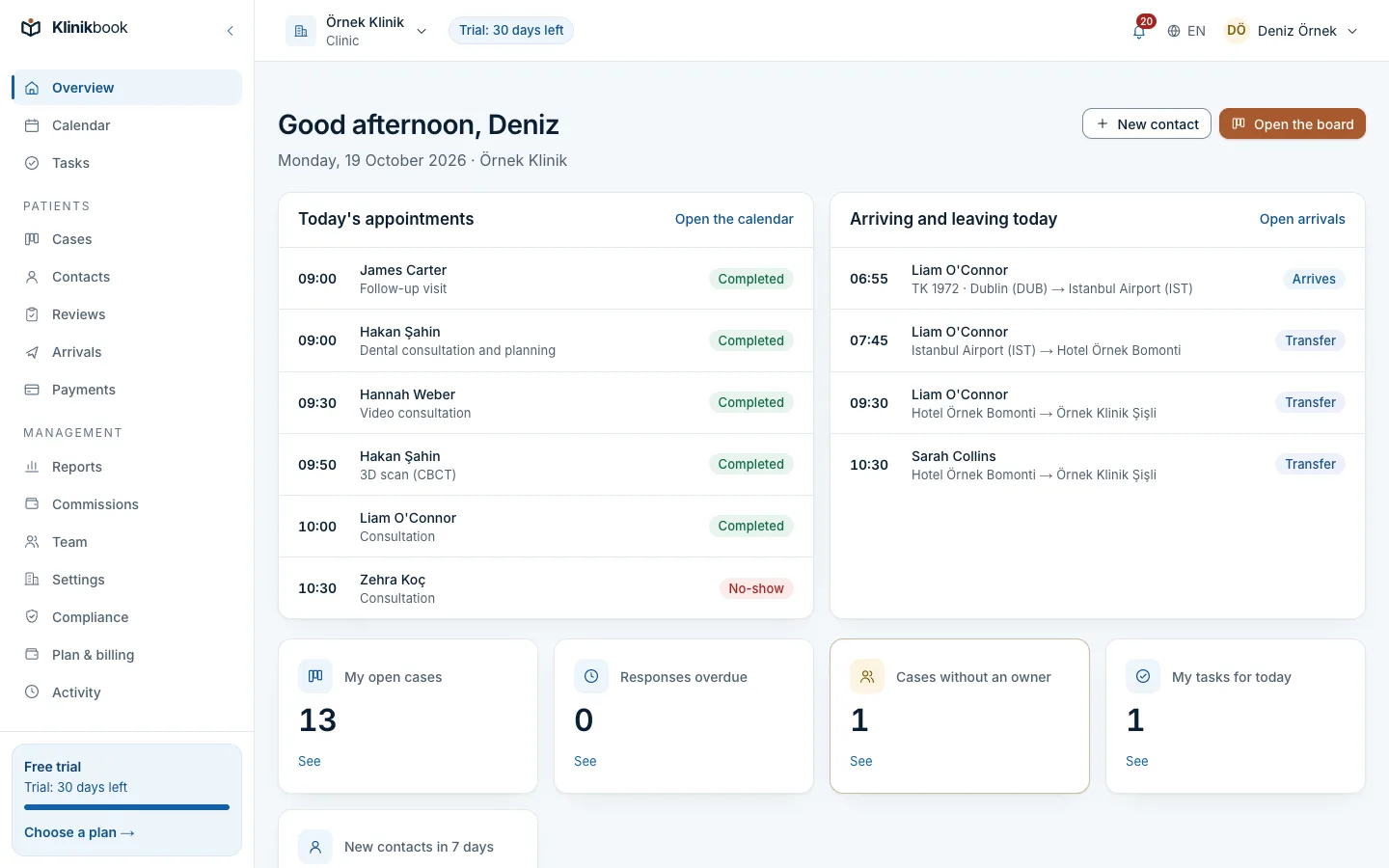
Klinikbook runs the patient relationship and the logistics; it keeps no medical records, X-ray archive or clinical treatment decisions; treatment plans in Klinikbook are session and package courses.
Pre-visit information with the dental form
The intake form that comes with the dental services asks for complaint, expectations and mouth photos; the patient uploads their panoramic X-ray as a file (scanned on upload). The dentist sees it in the review queue.
A quote with options
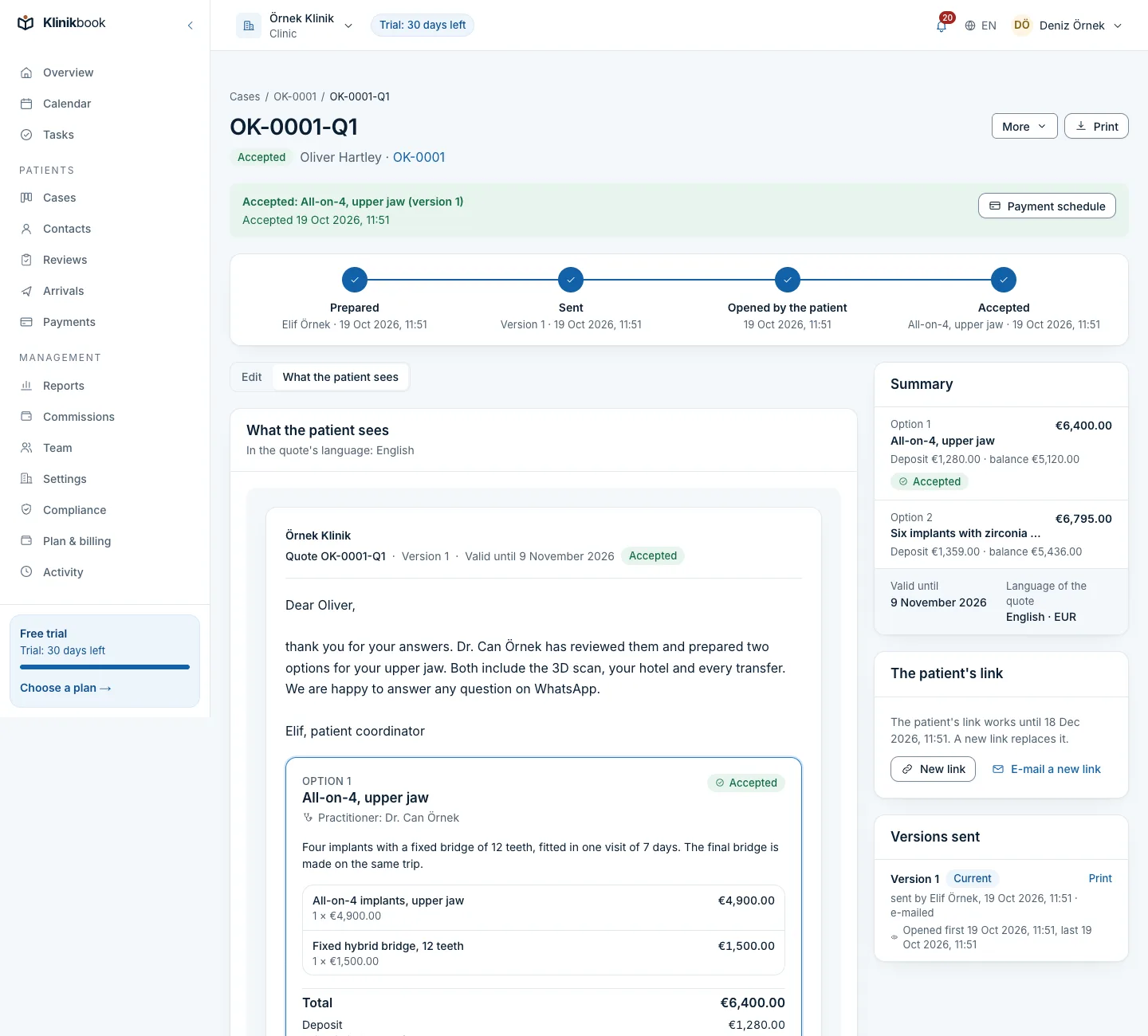
Options, inclusions and exclusions, deposit; it downloads as a PDF in the clinic's logo and colours, and the patient accepts in the portal.
Two trips, two sets of appointments
Flights, hotel nights, transfers and appointments for the first and second visit are planned as two separate trips. Resources (dentist, room, device) do not clash.
Follow-up and check-up reminders
After the second visit the dental follow-up plan starts; the patient is e-mailed, answers in the portal and can upload a photo. Warranty and care instructions stay in the portal.
Quote
Options side by side, items one by one
Options by number of implants or type of restoration, inclusions and exclusions, deposit and balance; internal costs are never visible to the patient.
- Downloads as a PDF
- Compared and accepted in the portal
- Currency is selectable
Appointments
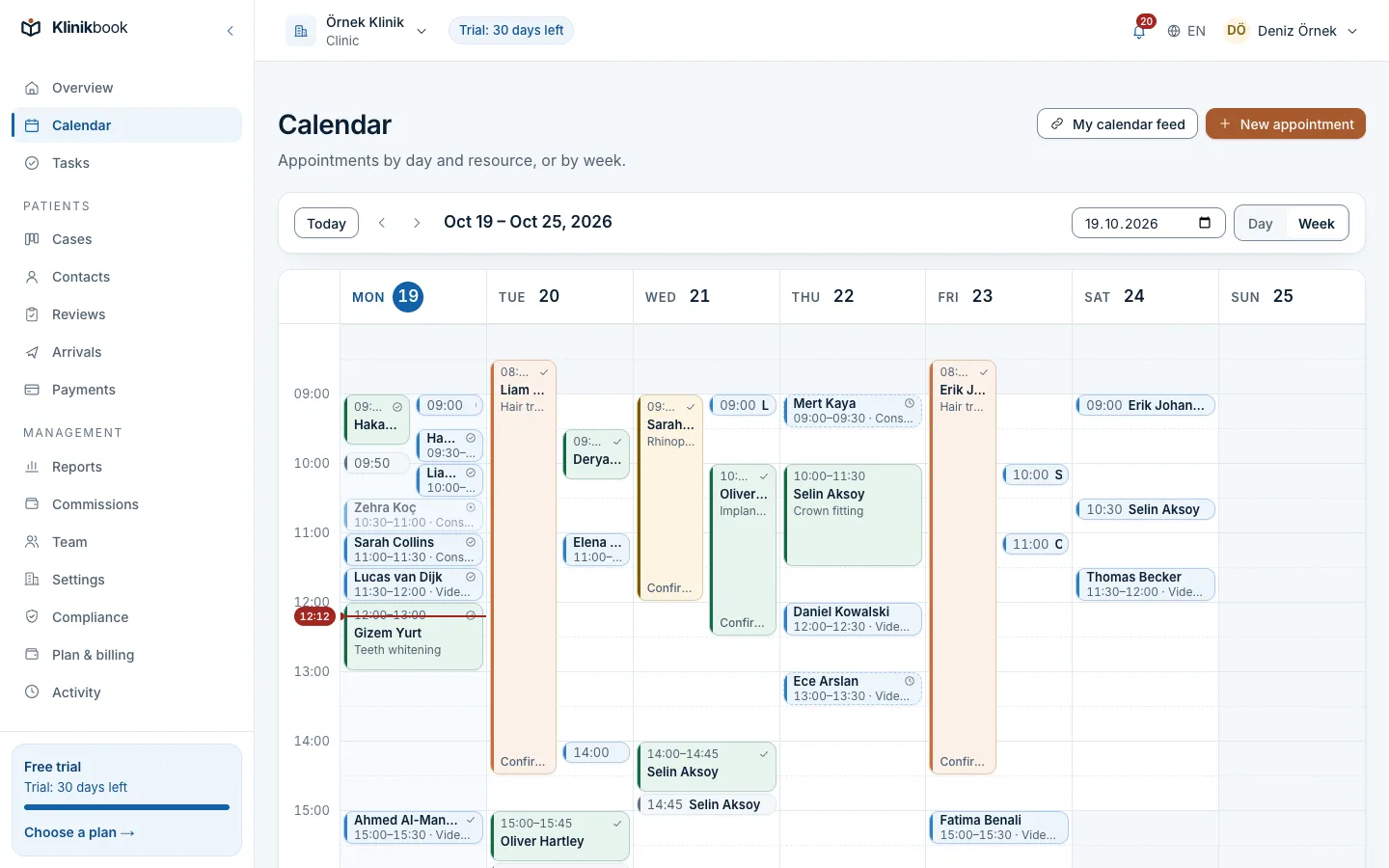
Dentist, room and device without clashes
Try-in days and the second visit go into the calendar as a dentist and a room; double bookings are blocked at the database level.
- Dentist, room and device resources
- Opening hours per location
- The patient sees their appointment in the portal
Set it up for your dental clinic
Choose the dental treatments when you open the workspace; the form, quote and follow-up plan come ready. 30 days free, no card needed.
Frequently asked questions
What documents do you ask a dental tourism patient for before the visit?
Usually a recent panoramic X-ray, mouth photos, complaint and expectations, medication and allergy information. The dentist decides what is needed; because it is health data, inform the patient beforehand.
Can a fixed price be given from an X-ray?
No, a preliminary quote can. The scope of treatment is settled by the dentist after examination and imaging; say so clearly in the quote.
How long should the gap between two visits be?
The dentist decides it; it depends on the treatment, the laboratory time and the patient. Organisationally, put the date range of the second visit in writing before the first visit ends.
Why does follow-up matter in dental treatment?
In a 2022 British Dental Association survey of UK dentists, 87% named crowns and 85% named implants as the treatments most likely to need follow-up work. So give check-up and warranty terms in writing before the patient leaves.
What should a warranty statement say?
What it covers, how long it lasts, which check-ups it expects, and who to contact and how. For its legal scope, ask your lawyer.
Does Klinikbook store X-ray images?
The patient can upload their X-ray as a file at intake and it is scanned and kept on the case; Klinikbook is not an imaging archive or a medical records system.
Sources
- Dental tourism: nine in 10 dentists have treated patients who travelled abroad for treatment — British Dental Association survey, reported by Dentistry.co.uk, 14 July 2022
- Turkey travel advice: Health — Foreign, Commonwealth & Development Office (GOV.UK)
- Regulation on International Health Tourism and the Health of Tourists, Article 6, liability of facilities and intermediaries (in Turkish) — Resmî Gazete, no. 32882, 26 April 2025
Related reading
Free tools
30-day free trial
Try Klinikbook with your own team
Every feature is open for 30 days, and no card is needed to start.