The aesthetic surgery patient: from first consultation to check-ups
Published 23 October 2026Reviewed 23 October 20267 min read
On this page
What should you watch in an aesthetic surgery patient's process?
The patient decides from messages, photos and a quote, yet the operation takes place in a foreign city in a foreign language. The UK's NHS advises people considering cosmetic surgery abroad to ask about the surgeon's training and qualifications, what happens if there are complications, and where follow-up will take place. The same page says aftercare is an important part of treatment.
For a clinic these questions are a checklist: have the answers written down before the patient asks.
The operation process step by step
An example layout; the order and timings are set by the surgeon and your facility's protocol.
- Intake
- What happensExpectations, target area, photos, health and medication information are collected
- OwnerCoordinator collects, surgeon reviews
- Doctor consultation
- What happensOnline or in person; suitability, options, risks and limits are discussed
- OwnerSurgeon
- Quote
- What happensSurgery, hospital stay, hotel, transfers, check-ups; inclusions and exclusions; deposit
- OwnerCoordinator prepares, surgeon approves the plan
- Travel plan
- What happensFlights, hotel, transfers for patient and companion; nights before and after surgery
- OwnerCoordinator; an authorised travel agency where needed
- Operation and hospital stay
- What happensPre-operative examination, surgery, hospital stay, discharge
- OwnerSurgeon and team; coordinator for schedule
- Check-ups
- What happensCheck-up appointments at the facility, rest at the hotel
- OwnerSurgeon
- Fit-to-fly decision
- What happensThe surgeon decides when the patient may fly; the patient gets it in writing
- OwnerSurgeon
- Remote follow-up
- What happensPlanned check-ins: questions and photos; a reported problem becomes a task
- OwnerCoordinator; clinical questions to the surgeon
What is collected at intake, and what is discussed in the consultation?
- What the patient wants to change and what they expect; the surgeon discusses this with the patient one-to-one.
- The photos the surgeon asks for, in good light and from the same angles.
- Health history, medication, allergies and previous operations, with the questions the surgeon sets; because it is health data, inform the patient first and get explicit consent where needed.
- The name and title of the doctor holding the consultation, and communication in the patient's language: arrange an interpreter before the meeting if needed.
- The patient's list of questions: what if there are complications, how would an extra operation be handled, where are check-ups done?
- Time to decide: give the patient time to think and state the quote's validity clearly.
Hospital stay, hotel and companion plan
- The surgeon decides how many nights the patient stays in hospital and the time of discharge; keep the hotel booking flexible accordingly.
- Write the night before surgery, the hospital nights and the hotel nights afterwards as separate lines.
- Put the companion in the plan as a traveller: name, flight, room. Explain the companion's role on the operation day and the first days.
- Airport welcome, hospital transfer and check-up day transfers should be written with times.
- Is the hotel suitable for rest (lift, quiet, meals) and who is the patient's contact: say so at the top of the plan.
- The NHS finds a holiday straight after surgery unrealistic; pass on clearly what the surgeon says about beach, sun, alcohol and sightseeing.
How are check-ups and remote follow-up planned?
The NHS asks patients to plan where check-ups will happen and reminds them that a clinic abroad may not provide follow-up or may work to different standards. So at quote stage, put in writing: the check-up days, how the patient sends photos, whom to write to and in which language, how to reach the doctor if there is a complaint, and what to take to a doctor in their own country if needed.
The strength of remote follow-up is regularity: when a check-in day arrives the patient is e-mailed, answers questions in the portal and uploads photos. Patients who do not reply, or who say “call me”, come to the team as tasks. The surgeon makes the clinical assessment.
How does the aesthetic surgery process run in Klinikbook?
Klinikbook runs organisation and communication. It keeps no medical records, offers no telemedicine and never touches patient money.
Intake with the aesthetic form
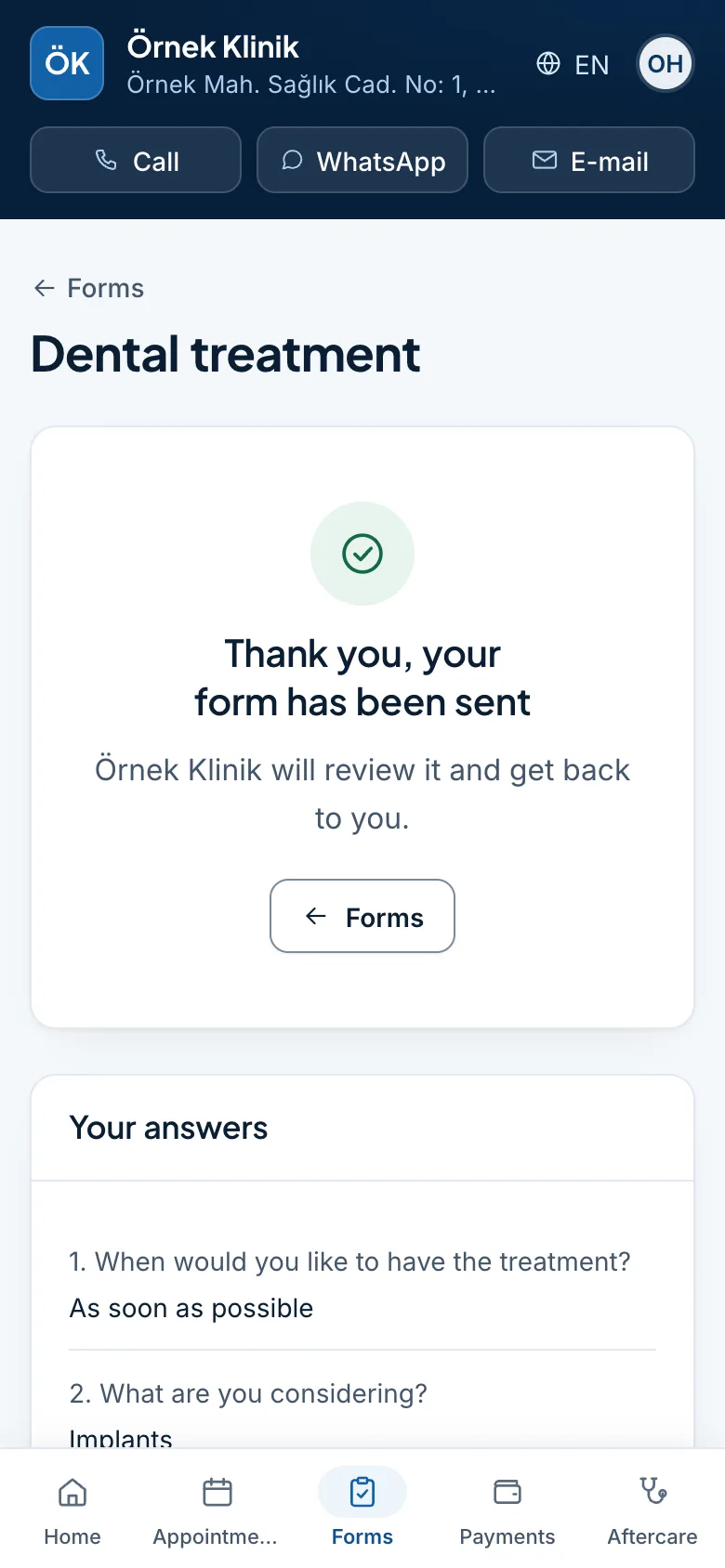
Ready aesthetic questions and guided photos come with your clinic's own example images; the patient fills them in through a secure link and the surgeon reviews them from the review queue.
Consultation appointment
The doctor consultation goes into the calendar with the doctor as a resource; the patient sees the appointment in the portal.
Quote and trip
The quote downloads as a PDF with inclusions and exclusions and the patient accepts it in the portal. The patient and companion, flights, hospital and hotel nights and transfers go into the trip.
Check-ups and remote follow-up
When the case reaches “treated”, the aesthetic follow-up plan starts; check-ins are e-mailed, and the patient answers in the portal and uploads photos.
Case
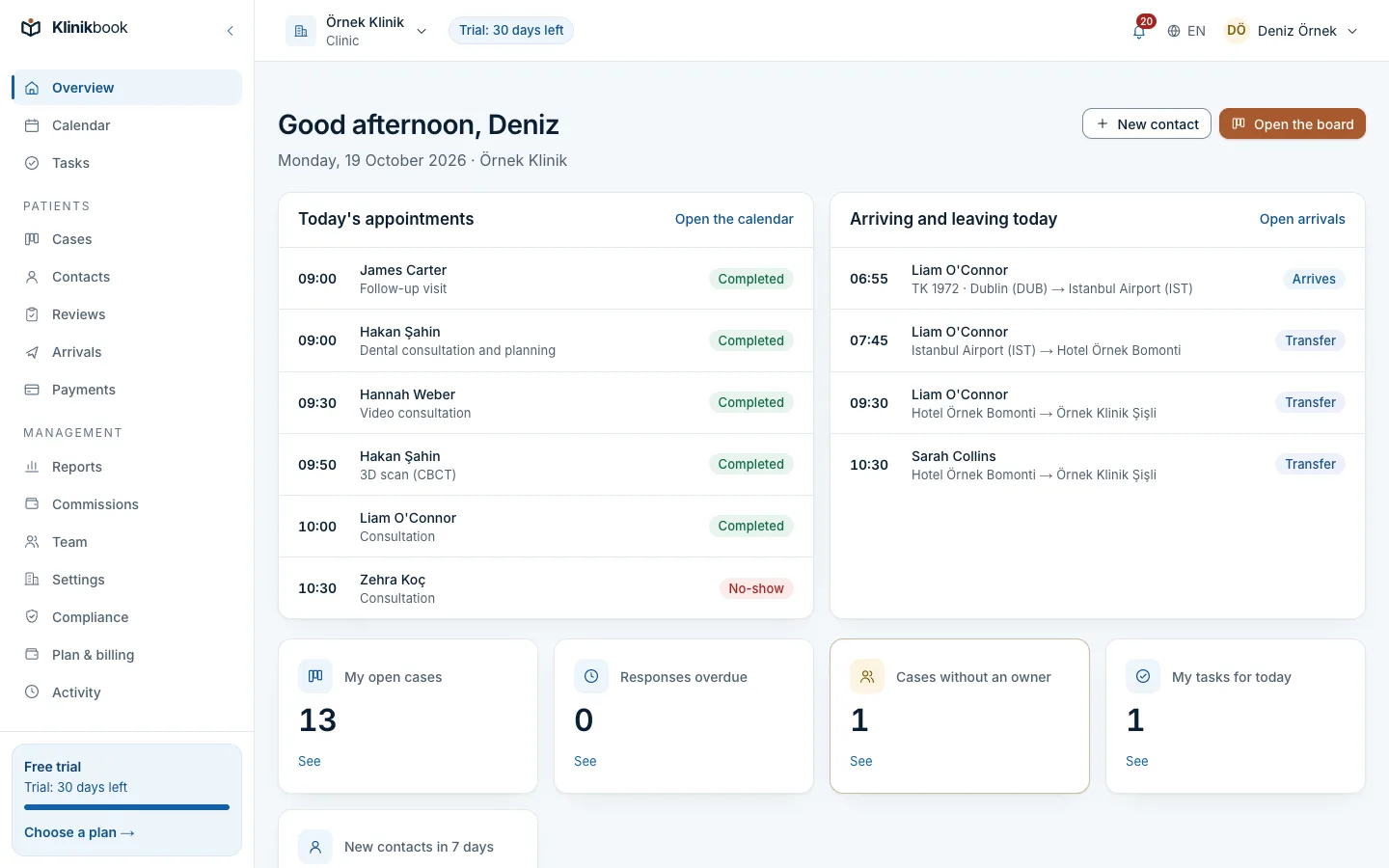
Every step inside one case
Intake, consultation, quote, trip, messaging and follow-up in the same case; the team knows who looks at what.
- Case timeline
- Doctor and location on the case
- Portal messages and e-mail
Trip
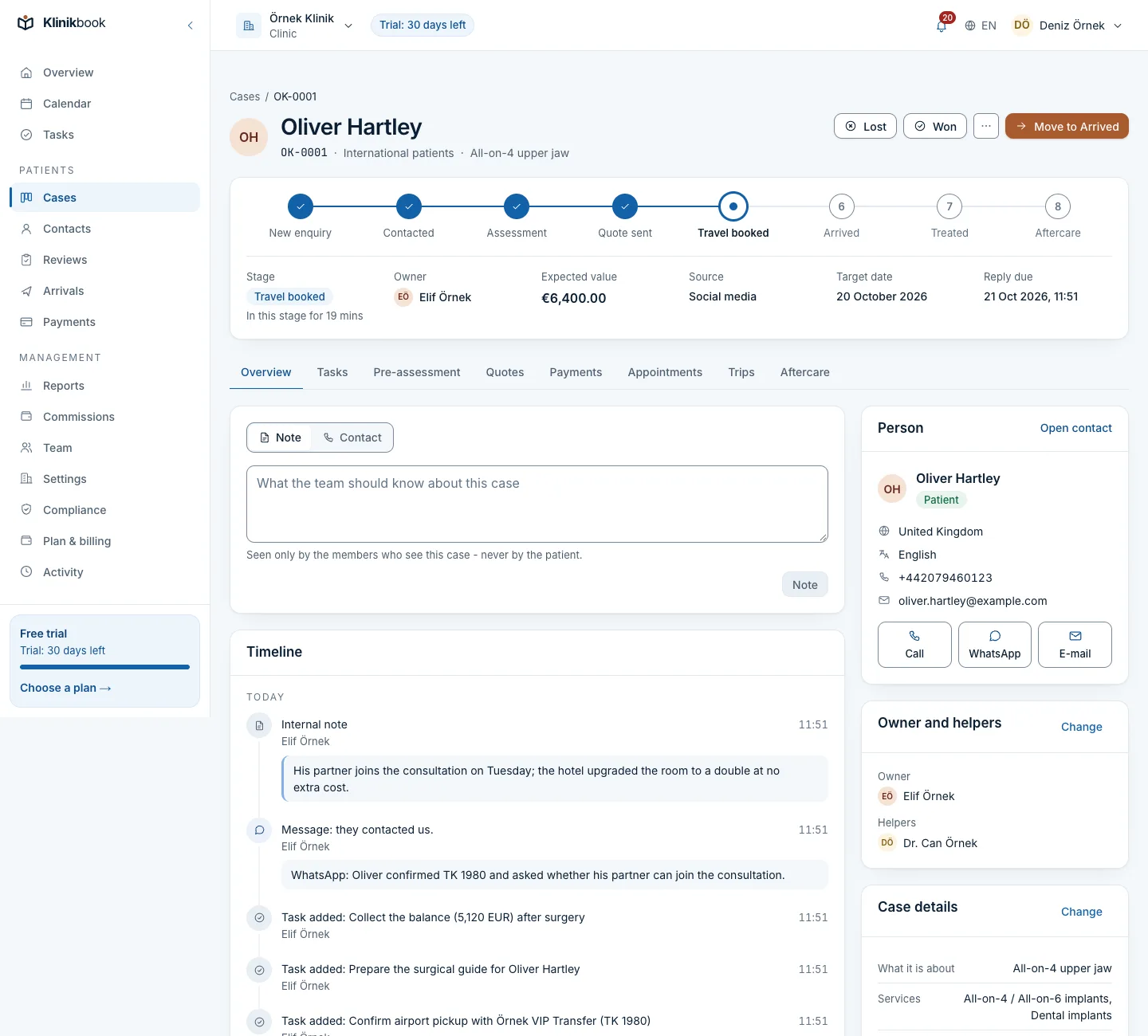
Patient, companion, hospital and hotel night by night
The companion as a traveller, the hospital stay and hotel nights in one plan; flights in local time. The patient sees the plan in the portal.
- Companions as travellers
- The transfer company sees only its share
- Changes are notified to the patient
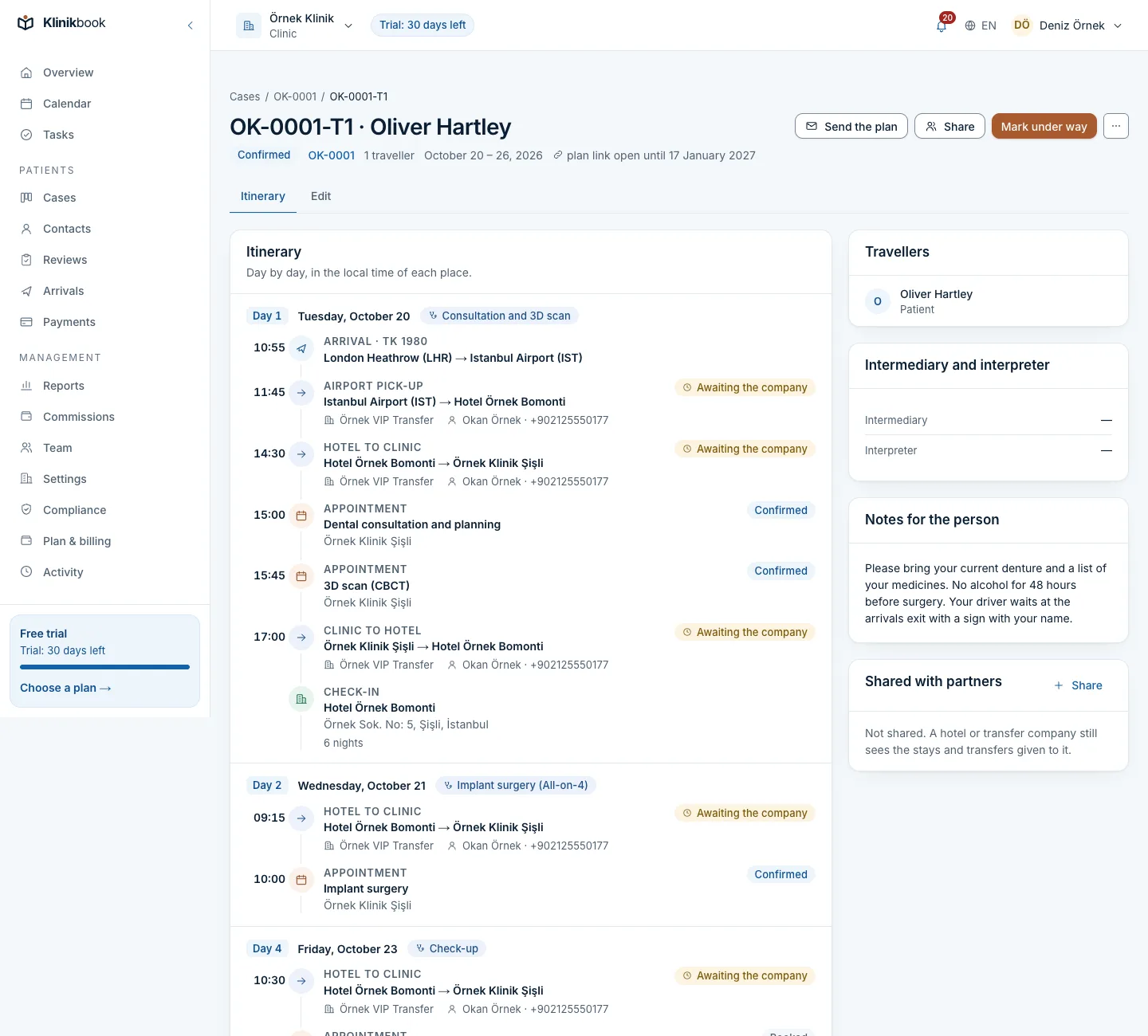
Trips, transfers and accommodation
Set it up for your aesthetic clinic
Choose the aesthetic treatments when you open the workspace; the form, quote and follow-up plan come ready. 30 days free, no card needed.
Frequently asked questions
What should an international patient ask before aesthetic surgery?
The NHS suggests asking about the surgeon's training and qualifications, what happens if there are complications, where check-ups are done, how an extra operation would be handled, the cost and the insurance cover. It is good practice for a clinic to give these answers in writing with the quote.
When can a patient fly after surgery?
The surgeon who operated decides. The NHS notes that flying after major surgery raises the risk of a blood clot and gives day ranges by procedure; they do not replace personal medical advice. The clinic gives the surgeon's decision to the patient in writing with a date.
How should the companion appear in the plan?
As a traveller: name, flight, room and role on the operation day. Whether a companion is needed and for how long is the surgeon's decision.
How are check-ups done after the patient is home?
Give a written follow-up plan at quote stage: check-up days, how to send photos, whom to write to and in which language. In Klinikbook the plan goes to the patient as an e-mail invitation, they answer in the portal and upload photos; the surgeon does the clinical assessment.
Can patient photos be used in promotion?
The Regulation on Promotion and Information Activities in Health Services ties patient images to strict conditions (explicit consent on the Ek-1 form, the right to preview and withdraw, no payment or discount for consent, no images during surgery or of intimate areas). Before-and-after images are allowed only in the same environment and technical conditions, with the procedure and viewing dates stated and no retouching; sharing patient thank-you and satisfaction statements in an advertising way is banned. Read the text and ask your legal adviser before deciding on promotion.
Does Klinikbook offer telemedicine consultations?
No. Klinikbook does not provide video examinations. You hold the doctor consultation with your own tool, schedule it in the Klinikbook calendar and keep notes on the case.
Sources
- Cosmetic surgery abroad — NHS (United Kingdom)
- Medical Tourism Awareness for Aesthetic Plastic Surgery Patients — ISAPS (International Society of Aesthetic Plastic Surgery), Patient Safety Committee, 15 June 2024
- Turkey travel advice: Health — Foreign, Commonwealth & Development Office (GOV.UK)
- Regulation on Promotion and Information Activities in Health Services (in Turkish) — Resmî Gazete, no. 33075, 12 November 2025
Related reading
Free tools
30-day free trial
Try Klinikbook with your own team
Every feature is open for 30 days, and no card is needed to start.